How to Choose a Collectible Figure Display Case Manufacturer
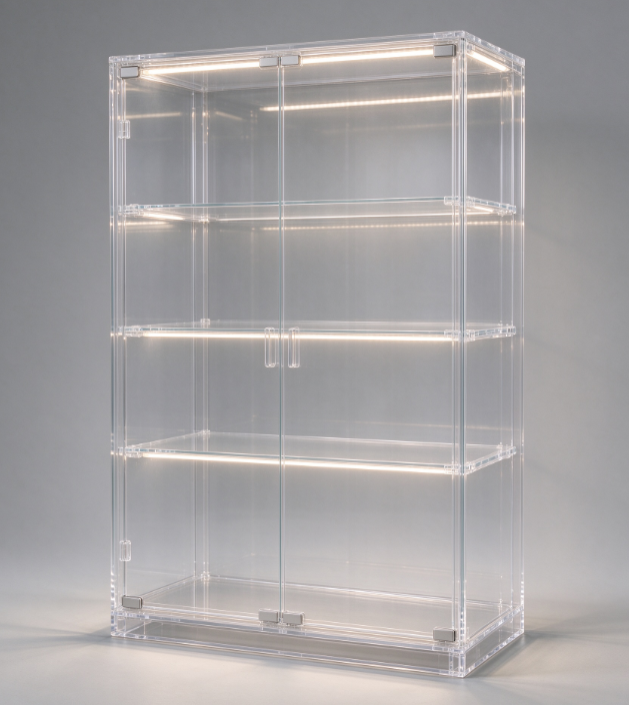
Table of Contents
· How to choose a collectible figure display case manufacturer
· 1. Start with the collection and viewing purpose
· 2. Select acrylic, glass and structural details
· 3. Plan lighting, dust control and UV exposure
· 4. Design access, packing and installation
· 5. Prepare a useful display case RFQ
· Illustrative display planning scenario
· Frequently Asked Questions
· Conclusion
· TDK
A collectible figure display case protects an item while making it easy to see. The right solution balances clarity, stability, access, lighting, dust control, transport and the style of the room or retail setting. Luminary presents itself as a premium acrylic display and signage solutions provider, with acrylic displays and figure showcase cases for retail, exhibitions and collectors. This guide explains how to choose a collectible figure display case manufacturer without assuming unverified material grades, UV ratings or production capabilities.
How to choose a collectible figure display case manufacturer
A display case is both a protective enclosure and a visual product. The case must support the figure, preserve clear sight lines and make cleaning or rearrangement practical. A cabinet for a single limited-edition figure may need different access and lighting from a multi-level retail display.
The Luminary website identifies Hangzhou Haoying Industry Co., Ltd. and lists acrylic display solutions, figure display series, window display fixtures and custom wall projects. Its homepage also describes more than 20 years of experience and monthly capacity, but project-specific equipment, material thickness, certifications and production limits should be confirmed directly.
1. Start with the collection and viewing purpose
Define what will be displayed: scale figures, statues, boxed collectibles, models, artwork or mixed items. Record dimensions, weight, fragile parts, base shape, pose, accessories and whether the collection will grow. Include viewing height, number of shelves and the distance from the viewer.
Retail and exhibition cases may prioritize branding, lighting and quick access. Home collector cases may prioritize quiet operation, dust sealing, modular shelves and easy cleaning. Decide whether the case stands on furniture, mounts to a wall or forms part of a larger display installation.
For a custom collectible display case manufacturer, provide a layout sketch or shelf plan. The manufacturer can then review clearances, doors, joints, cable routing and how the case will be delivered through the building.
2. Select acrylic, glass and structural details
Acrylic is valued for low visual weight, design flexibility and impact resistance compared with ordinary glass, but it can scratch and may require careful cleaning. Glass can provide a different optical feel and surface hardness, but adds weight and handling considerations. The right choice depends on size, location, safety, appearance and budget.
Define panel thickness, edge treatment, joints, doors, hinges, magnets, locks, shelves and base structure in the quotation. Do not use “crystal clear” as a technical specification; ask how optical clarity, seams, haze and allowable marks will be assessed.
Shelves and supports must suit the actual figure weight and center of gravity. A thin shelf may look elegant but flex under a heavy statue. Check support span, load distribution, anti-tip measures and the effect of repeated door opening.
3. Plan lighting, dust control and UV exposure
Lighting should reveal the figure without creating glare, hot spots or excessive heat. Consider LED position, colour temperature, dimming, cable routing, switch location and replacement access. If the display uses an external adapter, confirm voltage, plug type and where the cable exits.
Dust control depends on door gaps, seals, airflow and cleaning access. No display case is maintenance-free; define how panels are opened and which cleaners are safe for the chosen material.
Sunlight and display lighting can affect some plastics, prints, paints and fabrics over time. If UV exposure matters, ask for the actual panel or film specification and the test basis. Do not claim UV protection from a clear panel’s appearance alone.
4. Design access, packing and installation
Collectors need to place and remove figures without touching fragile parts. Review door swing, removable panels, shelf height, hand clearance, locks and the route for large items. Retail staff may also need fast access for price changes or product rotation.
Packaging should protect corners, transparent panels, hardware, lighting and shelves. Confirm whether the case arrives assembled, flat-packed or in modules, and define the installation sequence. Large acrylic parts can be damaged by poor stacking or protective-film removal.
For wall-mounted or custom wall projects, confirm fixing points, wall structure, load, leveling and cable concealment. Installation responsibility should be clear before production so the design matches the site.
5. Prepare a useful display case RFQ
A useful RFQ includes collection type, figure dimensions and weight, number of shelves, display location, material preference, lighting, dust and lock requirements, access, finish, quantity, sample needs, packing, installation and delivery route. Add reference images only to explain the desired arrangement, not as a substitute for dimensions.
Ask for a concept drawing, material sample, shelf-load assumption, lighting plan, cleaning guidance, packing method and quotation exclusions. If the product page shows broad categories such as acrylic displays and figure showcases, request a project-specific drawing before approval.
Use long-tail phrases such as “collectible figure display case manufacturer,” “custom acrylic figure display case,” “dustproof display case for collectibles,” “LED display cabinet for figures,” “retail collectible display case supplier,” “acrylic statue display case,” and “custom display cabinet manufacturer” naturally in the inquiry.
RFQ input | Why it matters | Evidence to confirm |
Collection and load | Sets shelf size and support needs | Figure layout, weight and dimensions |
Material and structure | Controls clarity, stability and appearance | Panel specification and drawing |
Lighting and power | Protects viewing quality and service | Lighting plan and adapter details |
Dust and access | Supports cleaning and rearrangement | Door, seal and maintenance plan |
Packing and installation | Reduces delivery and site risk | Packing drawing and installation guide |
Illustrative display planning scenario
A collector wants a wall-mounted case for several mixed-scale figures with low-glare lighting. The buyer provides figure heights, shelf loads, wall dimensions, cable location and cleaning preferences. The supplier prepares a layout, checks fixing points and sends a material and lighting sample before final production. This is an illustrative workflow, not a reported Luminary project or a guaranteed capability.
Frequently Asked Questions
What should I provide to a display case manufacturer?
Provide figure dimensions and weights, layout, number of shelves, location, material preference, lighting, lock and dust needs, packaging, installation and delivery requirements.
Is acrylic better than glass for collectible figures?
It depends on size, safety, clarity, scratch exposure, weight, budget and the design. Ask the manufacturer to compare the complete case rather than one material alone.
How can I reduce glare in a figure display case?
Review LED position, panel angles, brightness, surface condition and room lighting. A sample is more reliable than a claim based only on a material name.
Does a display case eliminate dust and UV risk?
No. It can reduce exposure when designed and maintained correctly, but cleaning, room conditions, sunlight and the actual panel specification still matter.
Conclusion
A good collectible figure display case manufacturer starts with the collection, room and viewing purpose. Define support, materials, lighting, access, dust control, packing and installation before comparing suppliers. This gives collectors and retailers a clearer basis for choosing a case that protects the figures without making everyday use difficult.
TDK
Field | Content |
SEO Title | How to Choose a Collectible Figure Display Case Manufacturer |
Meta Description | A practical guide to selecting a collectible figure display case manufacturer by materials, shelves, lighting, dust control, packing and installation. |
Long Tail Keywords | collectible figure display case manufacturer; custom acrylic figure display case; dustproof display case for collectibles; LED display cabinet for figures; retail collectible display case supplier; acrylic statue display case; custom display cabinet manufacturer |
Collectible Figure Display Case Quality Control Guide
How to control acrylic panels, shelves, lighting, packing and installation
Table of Contents
· Quality control for collectible figure display cases
· 1. Control drawings, materials and revisions
· 2. Inspect panels, joints, shelves and hardware
· 3. Verify lighting, access and display safety
· 4. Protect clarity, cleanliness and packing
· 5. Manage installation and repeat orders
· Illustrative quality-control scenario
· Frequently Asked Questions
· Conclusion
· TDK
Quality control for a collectible figure display case is visible in the details: clean panels, even joints, stable shelves, reliable doors, safe lighting and packaging that prevents scratches. A case can look attractive in a factory photograph and still fail during delivery or daily use. This article gives buyers a practical inspection framework while leaving exact acrylic grades, glass type, load limits and UV claims to the approved project documents.
Quality control for collectible figure display cases
A useful control plan links the approved layout to material receipt, cutting, forming, bonding, hardware, lighting, cleaning, packing and installation. Record case reference, revision, panel material, shelf arrangement, accessories and release status.
Luminary’s public site describes acrylic displays and figure showcase cases, but the project-specific product catalogue, panel grades and inspection standards should be requested before approval. A broad display category is not a substitute for a technical drawing.
1. Control drawings, materials and revisions
Use one approved drawing showing overall dimensions, panel thickness, joints, door direction, shelf levels, fixing points, cable route, lighting position and labels. A revision change should trigger a review of fit, load, appearance and packing.
Material records should identify the approved acrylic, glass, metal, wood or hardware basis. If a substitute is proposed, compare clarity, scratch behaviour, strength, colour, chemical resistance and cleaning instructions before accepting it.
For a custom acrylic display case supplier, keep a bill of materials and approved sample. Transparent materials can make small differences in tint, haze or edge finish obvious after assembly.
2. Inspect panels, joints, shelves and hardware
Inspect panel dimensions, cut edges, drilled holes, corners, scratches, protective film and visible joints. Bonded seams should be clean and consistent, while screws, magnets, hinges and locks should operate without stressing the panel.
Check shelf flatness, support span, fit and stability with a representative load. Heavy figures can create local stress even when the total shelf load seems modest. Include anti-tip or wall-fixing checks where the design requires them.
A first article should be inspected before repeat production. Record the case revision, sample layout, material, hardware and any approved appearance limits so later cases can be compared fairly.
3. Verify lighting, access and display safety
Test LED position, brightness, dimming, switch or controller, cable routing, adapter, heat and replacement access. Check that the lighting does not create dangerous hot spots or obstruct figure placement.
Open and close doors repeatedly, check alignment, locks, clearances and hand access, and verify that removable panels can be handled without damaging edges. If the case is wall mounted, inspect fixing points and leveling.
Do not claim a display case is childproof, UV protected or museum grade without a defined design and test basis. State what the case is intended to do and what maintenance or site conditions remain the user’s responsibility.
4. Protect clarity, cleanliness and packing
Clean transparent panels with the approved method and inspect under the lighting in which the case will be viewed. Check dust, fingerprints, haze, adhesive marks, micro-scratches and protective-film residue.
Packing should protect corners, doors, shelves, hardware and lighting. Use separators and surface protection appropriate to the material. Labels should identify model, revision, quantity and installation orientation where needed.
A delivery inspection should record damage before protective film is removed. If a panel is replaced, recheck fit, clarity, joint appearance and packing because a replacement can introduce new variation.
5. Manage installation and repeat orders
Installation instructions should cover unpacking, film removal, assembly, leveling, wall fixing, cable connection, lighting setup, cleaning and safe loading. The guide must match the delivered revision.
Repeat orders should use the approved drawing, material basis, hardware, lighting and packing method. Record changes to panel supplier, adhesive, fixture, LED system or installation site.
When a complaint occurs, capture case revision, transport condition, room environment, figure weight, photographs and retained parts. This helps separate manufacturing damage from installation, cleaning or handling issues.
Control point | Risk controlled | Evidence to review |
Drawing and materials | Wrong revision, tint or panel basis | Approved drawing and material record |
Panels and joints | Scratches, haze or visible defects | Appearance and dimensional inspection |
Shelves and hardware | Instability or poor access | Loaded fit and operation check |
Lighting and safety | Glare, heat or unreliable control | Functional test and wiring review |
Packing and installation | Transport damage or site failure | Packing inspection and installation guide |
Illustrative quality-control scenario
A retail case arrives with a door that closes correctly but produces glare across the top shelf. The team checks LED angle, panel reflection, brightness and room lighting, then compares the result with the approved sample before changing the light position. This is an illustrative investigation path, not a reported Luminary result.
Frequently Asked Questions
Why is a visual inspection not enough?
A case can look clear but still have weak shelves, poor door alignment, glare, unsafe wiring or packaging risk. Test the complete case with its intended load and accessories.
What documents should I request?
Request the approved drawing, material and hardware list, lighting details, inspection results, packing method, installation guide and approved deviation records.
How should acrylic display cases be cleaned?
Follow the manufacturer’s current guidance for the actual material. Use suitable cloths and cleaners, and avoid methods that can scratch or craze the panel.
Can lighting or hardware be changed after approval?
Only after checking fit, heat, cable routing, appearance, power and safety. Record the change and repeat the relevant inspection.
Conclusion
A reliable display case is produced through controlled drawings, consistent materials, stable shelves and joints, tested lighting, careful cleaning and protective packing. Buyers should inspect the complete case and its installation method rather than judge a sample photograph alone. That evidence supports a more dependable collectible figure display case manufacturer selection.