Acrylic Display Stand Buyer's Guide: A1, A11, and Figure Display Case F1
A procurement-focused guide to selecting acrylic display stands and cases: requirements, specification trade-offs, supplier questions, sample validation, and warning signs.
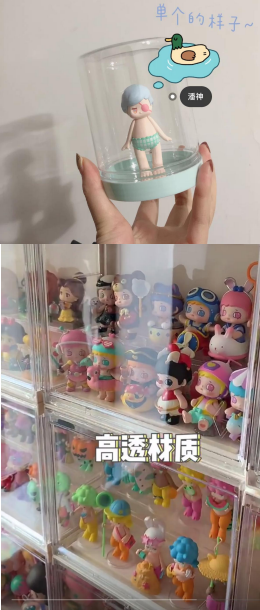
Start with the display decision, not the product name
Buyers searching for an acrylic display stand usually face one of three situations: equipping a retail floor with modular stands, specifying a large-format display for a flagship environment, or protecting collectible figures in a case that still shows detail. The product names Acrylic Display Stand A1, Acrylic Display Stand A11, and Figure Display Case F1 sit in different parts of that decision. Treating them as interchangeable leads to mismatched specifications, awkward samples, and rework.
This guide organizes the purchase around the decisions you must make before contacting a supplier: what the display must hold, where it will stand, how it will be cleaned and moved, what visual finish matters, and what evidence you need before placing an order. Product descriptions referenced here come from the supplier's published catalog information; dimensions, load ratings, acrylic thickness, and lead times are not stated in that material and must be confirmed in writing.
Define the display requirement before comparing models
A useful requirement brief fits on one page. It forces the buyer to separate must-haves from preferences and gives every supplier the same basis for quoting. At minimum, capture the following:
- Object profile: what will be displayed, its approximate dimensions and weight range, and whether the object changes over time (seasonal ranges, rotating collectibles).
- Environment: indoor retail floor, window with direct sun, museum-style case, or home collection. Light exposure and foot traffic affect material and cleaning choices.
- Footprint and height limits: available shelf depth, counter space, or floor area, plus any sightline constraints.
- Handling: whether staff will rearrange displays daily, weekly, or rarely; whether the unit will be moved between locations.
- Visual finish: clear edges, polished edges, frosted panels, colored bases, or printed branding.
- Quantity and phasing: a single flagship piece versus a multi-store rollout, and whether later repeat orders must match the first batch.
Write these as measurable statements where possible. "Fits a 300 mm deep shelf" is testable; "premium look" is not. The supplier can then propose a construction rather than guess.
How the three catalog products differ in role
The supplier's catalog describes each product with a distinct positioning. That positioning is the starting point for a fit conversation, not a specification sheet.
| Product | Catalog positioning | Typical buyer question | What to confirm before sampling |
|---|---|---|---|
| Acrylic Display Stand A1 | Referenced as a supplier product in the acrylic display stand category; no specification detail supplied | Is this the right base model for a standard retail display? | Dimensions, acrylic thickness, base construction, available finishes, packing method |
| Acrylic Display Stand A11 | Large-scale acrylic display system for flagship stores and premium retail environments | Can it carry the intended objects at the required height without visible flex? | Load capacity, panel thickness, joint or assembly method, anchoring or stability measures, installation requirements |
| Figure Display Case F1 | Premium collectible figure display case with crystal-clear acrylic protection and an elegant base | Does the case protect figures while keeping detail visible from normal viewing angles? | Internal clear dimensions, closure or access method, base material, ventilation or dust sealing, scratch resistance |
The A11 and F1 descriptions imply different engineering priorities. A large-format retail system raises questions about stiffness, stability, and installation. A collectible figure case raises questions about optical clarity, dust control, and safe access. The A1 entry in the supplied catalog carries no descriptive detail, so treat it as a model to be specified rather than assumed.
Selection criteria that actually separate suppliers
Most acrylic display suppliers can show a catalog. Fewer can answer the same technical questions consistently across a sample, a quotation, and a production order. Use the criteria below to structure the comparison.
Material and construction clarity
Ask which acrylic grade and thickness are proposed for each panel, and how edges are finished. For a figure case, edge finish affects both appearance and the risk of sharp contact points. For a large stand, panel thickness and joint design affect how the unit behaves under load. If a supplier cannot state thickness in millimetres or explain how panels are joined, the quotation is not yet comparable.
Stability and load behavior
Acrylic is stiff but not immune to deflection over span. For the A11's flagship-scale positioning, ask how the design avoids visible sag or rocking, whether the base is weighted, and whether wall or floor anchoring is recommended. Request the supplier's stated load basis and the conditions under which it applies. A load figure without a test basis or use condition is difficult to rely on.
Optical quality and finish
"Crystal-clear" is a marketing phrase, not a measurable specification. Ask how the supplier controls visible scratches, haze, and edge cloudiness, and request close-up photographs or a physical sample under the lighting conditions of your venue. For the F1 case, view a sample at the distance and angle your customers will actually use.
Consistency across repeat orders
If you are rolling out to multiple stores, the second order matters as much as the first. Ask how the supplier records approved samples and whether production is checked against them. A signed or photographed golden sample, referenced in the purchase order, is a practical control.
Packing and transport risk
Acrylic scratches and cracks in transit. Ask how flat panels and bases are protected, whether units ship assembled or flat-packed, and what the supplier's documented process is for transit damage claims. The answer reveals how much the supplier has thought about the last mile.
Questions to put to every candidate supplier
Send the same written questions to each supplier and compare answers side by side. The wording below is deliberately specific so that vague replies stand out.
- Which acrylic grade and thickness do you propose for each component, and why?
- What is the stated load or span basis for the A11 configuration, and under what conditions does it apply?
- How are edges finished, and what finish options are available?
- Can you supply a physical sample or pre-production unit before the bulk order?
- How do you record and reproduce an approved sample for repeat orders?
- How are units packed, and what is your documented process for transit damage?
- Which parts of the specification are you able to confirm in writing on the quotation?
Suppliers who answer in specifics are easier to manage than those who answer with assurances. Record the answers in a comparison sheet; the gaps often matter more than the strengths.
Validate with a sample before committing
A sample is the cheapest place to discover a mismatch. Define what the sample must prove before it arrives:
- Does the display hold the actual object, with the intended clearance and viewing angle?
- Is the finish acceptable under your venue lighting, including reflections and edge appearance?
- Is the unit stable when touched or loaded as it will be in use?
- Can staff assemble, open, or clean it without special tools?
- Does the packed sample arrive undamaged, and how was it protected?
For the F1 figure case, place a representative figure inside and check visibility from standing and seated heights. For the A11, test the intended load and check for movement or flex at the joints. Approve the sample in writing, with photographs, and reference that approval in the purchase order.
Warning signs during supplier evaluation
Certain patterns predict problems after the order is placed. Watch for suppliers who:
- Quote without asking what the display will hold or where it will stand.
- Describe material only in promotional terms and decline to state thickness or grade.
- Cannot explain how a large-format unit stays stable.
- Resist providing a sample or pre-production unit.
- Give different specifications in the quotation and the sample discussion.
- Have no documented approach to packing or transit damage.
None of these is disqualifying on its own, but a cluster of them suggests the supplier is selling catalog images rather than engineered displays.
Next actions for the buyer
Draft the one-page requirement brief, send the supplier questions above to a shortlist, and request samples of the specific configurations you are considering. For the A1, ask for a full specification because the catalog entry is thin. For the A11, focus the sample review on stability and finish at flagship scale. For the F1, focus on clarity, access, and dust control around the figure.
Use luminaryindustry.com's inquiry channel to request the written specifications and sample terms for these models, and keep every confirmed detail in the purchase order so that the approved sample, the quotation, and the delivered goods describe the same product.